Hidden smaller incisions
Incisions are planned in discreet anatomical areas and kept smaller than the Deep Plane approach.

Hidden smaller-incision approach
9D Facelift uses strategically hidden, smaller incisions and an individualized lifting direction, with comparatively faster early recovery for suitable patients.
The core distinction
The defining direction of 9D Facelift is its hidden smaller-incision strategy. The exact placement, support layer, lifting direction, and whether the neck or jawline should be addressed are confirmed after examination.
Incisions are planned in discreet anatomical areas and kept smaller than the Deep Plane approach.
The direction and extent of lift are matched to the patient’s facial structure instead of a fixed package.
A smaller-incision pathway is designed for a less involved early recovery, although swelling and healing still vary.
Facial liposuction may be combined when selected fat deposits are blurring the mandibular border.
Who may consider it
9D Facelift may be discussed when the desired correction can be achieved through its smaller-incision approach. Age or the word “mild” alone does not decide the procedure.
The patient values a smaller, hidden incision strategy and understands that no scar can be guaranteed invisible.
Jowls, lower-face descent, and a softer jawline are assessed in relation to the whole face.
The patient prefers a comparatively faster early recovery and is suitable for the proposed extent of surgery.
The desired change is rejuvenation and support—not redesigning the person’s recognizable facial features.
9D or Deep Plane
Strategically hidden, smaller-incision approach.
Larger incision approach for wider deep-plane access.
Customized lifting through smaller access points.
Release and repositioning of the fascia / deep-plane tissues.
Designed to be comparatively faster for suitable patients.
Generally more involved because of the broader dissection and incision.
May be combined when selected fat deposits blur the jawline.
May also be combined for the same contour objective.
Confirmed after anatomy, health, prior treatment, scar history, and goals are reviewed.
Confirmed through the same individualized medical assessment.
Neither approach is automatically “better.” The correct plan depends on what can be treated safely and proportionately for the individual patient.
Lift + contour
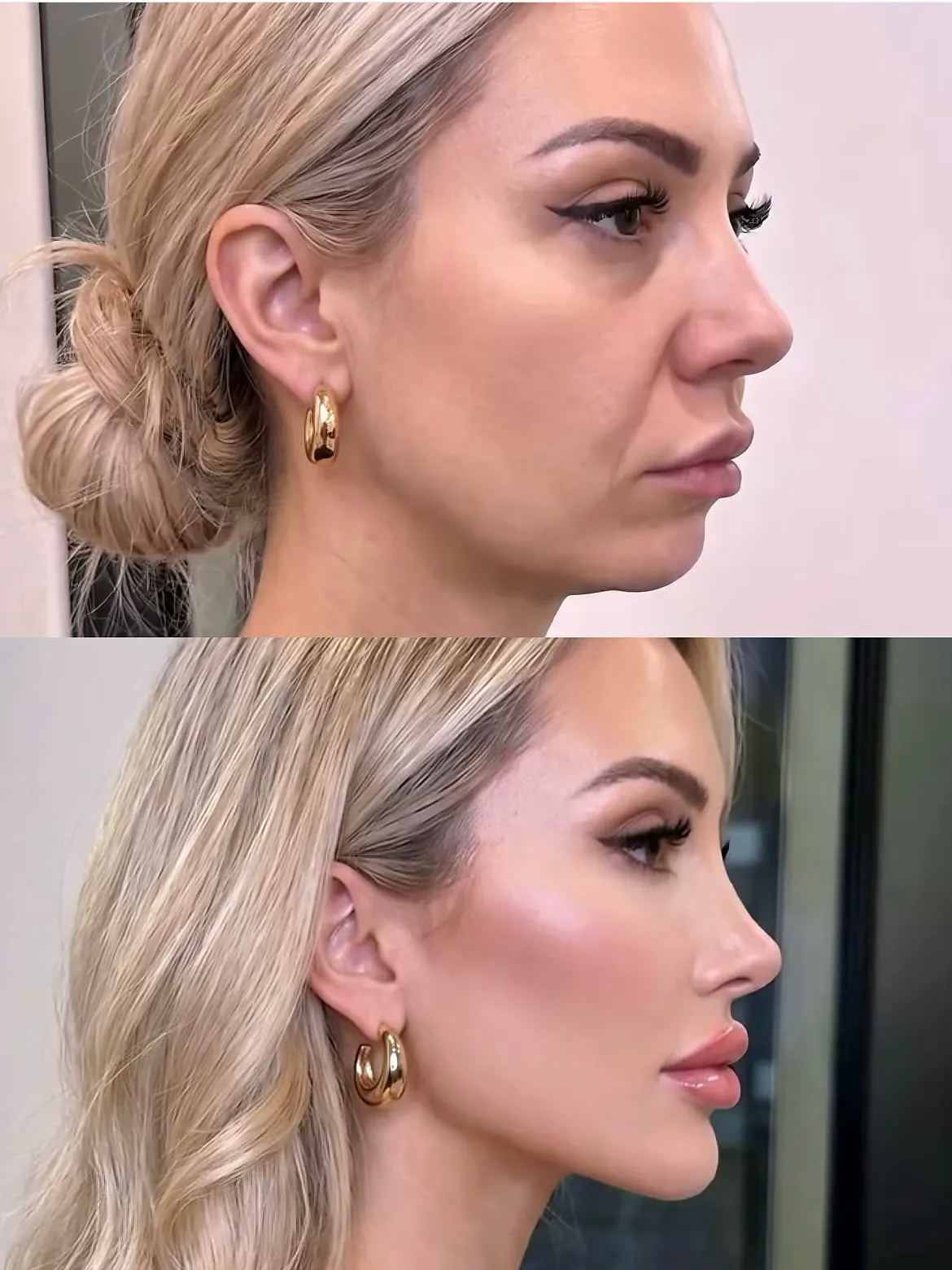
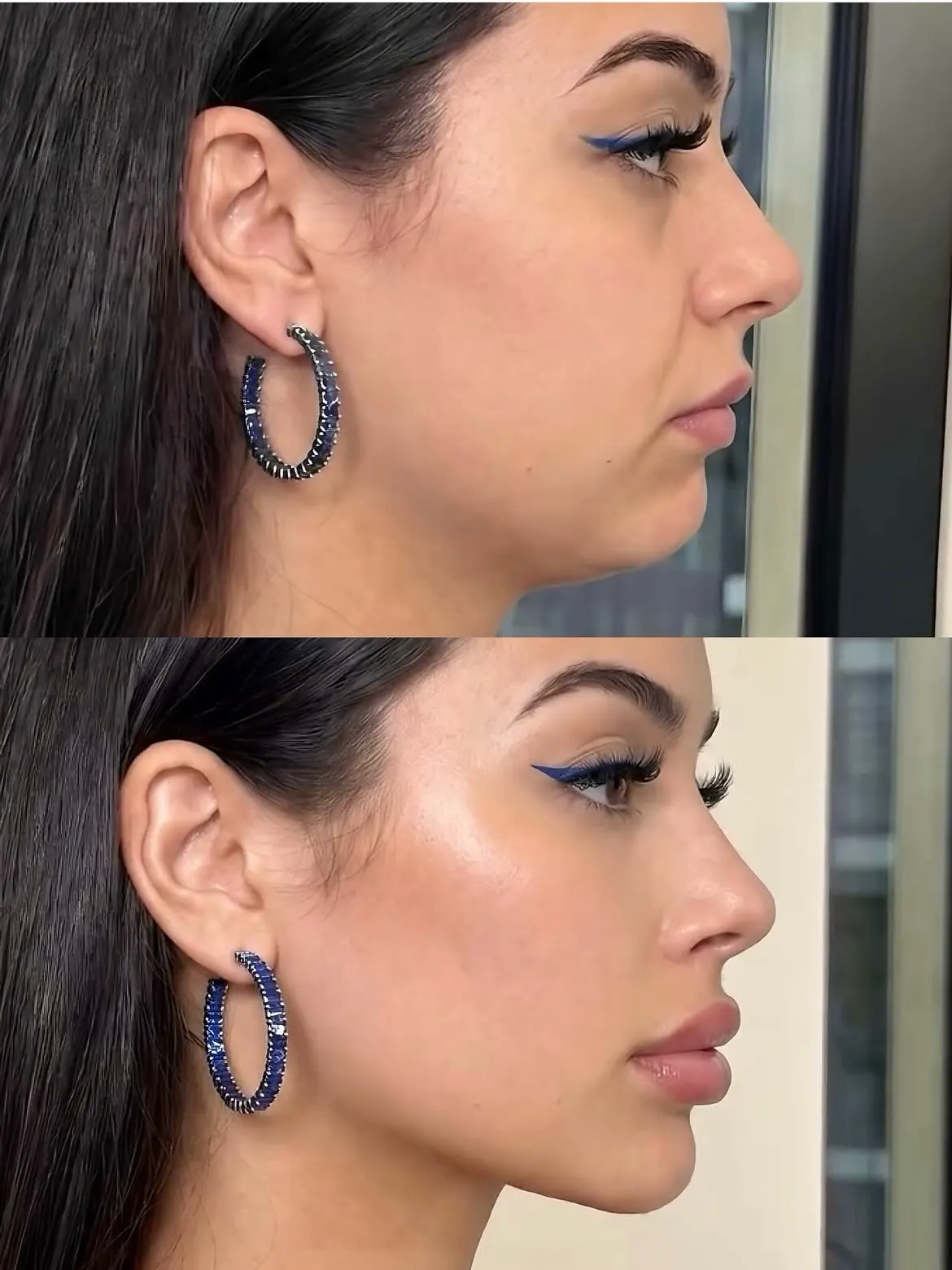
A lift repositions support; facial liposuction addresses selected fat deposits. When both contribute to a blurred jawline, they may be planned together. These images are visual references for the contour concern and do not identify one universal procedure.
Observation, swelling management, rest, and incision care according to the actual plan.
Early review and updated aftercare guidance. Visible swelling or bruising may remain.
Many patients enter a more social phase of recovery, but tightness, numbness, or asymmetry may still be present.
Contours continue to settle and refine. Scar maturation takes longer.
The actual procedure, health, swelling, bruising, sensation, scar biology, and aftercare all affect recovery. The treating surgeon’s instructions take priority over general timelines.
9D Facelift questions
No. It is a surgical lifting approach. Thread lifting differs in access, depth, longevity, risks, and recovery.
No scar can be guaranteed invisible. 9D uses a smaller, discreet incision strategy, but placement and healing remain individual.
No. The key distinction is the smaller-incision surgical approach and whether it can safely achieve the required correction—not a simple age or severity label.
Yes, when selected fat deposits contribute to a blurred jawline. The need and extent must be assessed individually.
Natural expression is a planning priority, but no appearance can be guaranteed. Anatomy, surgical judgment, and healing influence the result.
No. Photos support preliminary direction only. Final planning requires medical history, examination, safety review, and informed consent.
Private online review
Message the team directly in WhatsApp or complete the structured form so the team can review your information before continuing privately.
WeChat · Shanghai team
Connect for consultation coordination, clinic updates, and a closer look at the team’s daily work. WhatsApp remains the primary channel for international assessments.